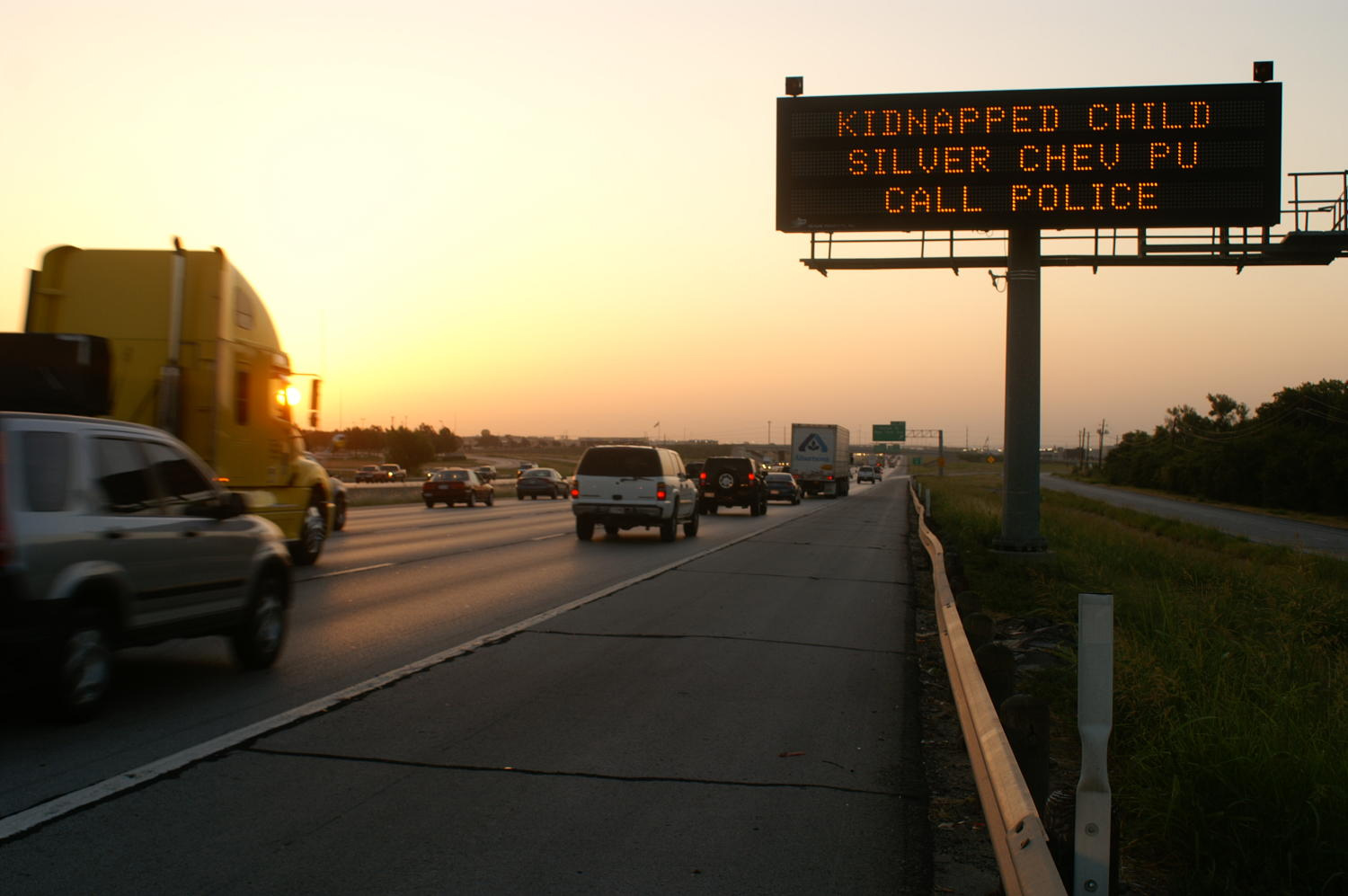
Imagine it is two o’clock in the morning. Your phone suddenly makes that familiar alert sound, rudely waking you from sleep. Half-awake, you reach for the phone and see another notification about a missing child. Your first thought might be somewhat cynical: “At two in the morning? Who is going to drive around the streets looking for a missing child?” And yet, the answer might be surprisingly simple: maybe we are.
That is the starting point presented by American amateur radio operator Brent Boydston, KF5THB, in his article posted on the QRZ forum. Boydston points to an issue that often remains outside the main focus of the amateur radio community. Missing children, elderly people, and others who may be particularly vulnerable are not situations that happen once every few years. In many places, these cases occur regularly. In the United States, systems such as AMBER Alert and Silver Alert are used to quickly notify the public about missing persons and situations involving people who may need assistance.
Boydston asks a very simple question: if there are tens of thousands of amateur radio operators across the United States who have vehicles, radios, and the knowledge needed to maintain reliable communications, why not use that potential to help in situations like these?
Imagine that local police are conducting a search for a missing person. Instead of leaving amateur radio operators as passive observers of alerts, a prepared and trained group could be organized to activate a dedicated search net when needed. Operators could be assigned to specific areas, drive designated routes, and maintain continuous communications with one another. One operator might check parking lots, another the area around a park, another the roads leading out of town, while a net control operator collects information and passes it to the appropriate people coordinating the search.
Obviously, the idea is not for amateur radio operators to replace police, fire departments, or specialized search-and-rescue teams. Quite the opposite. A system like this would only make sense if it operated in an organized manner and in close cooperation with the appropriate authorities. Radio operators would need to understand where they are authorized to operate, what information they can report, and who should receive that information. Conducting an independent search without coordination could not only interfere with the official operation, but could also put the volunteers themselves at risk.
This is where amateur radio has tremendous potential. Radio operators often have something that may be in short supply during the first hours of a search: people who know the local area, have vehicles and radios, and are comfortable operating communications equipment. A dozen or more properly prepared volunteers could quickly position themselves in different parts of a city or county. Each operator becomes another set of eyes, while the radio network allows information to be quickly shared with the entire team.
Importantly, we do not need a major disaster for amateur radio to demonstrate its value. For years, the amateur radio community has talked about preparing for emergencies, natural disasters, and infrastructure failures. Those are certainly important missions, but for many people they can seem abstract and far away. A missing child, an elderly person who has wandered away, or someone else who needs help is a problem that can happen today, in our community, on our own streets.
This may also provide an answer to a question that has been asked in the amateur radio community for years: how do we get young people interested in our hobby?
We can tell a young person that amateur radio allows them to talk to people on the other side of the world. That is certainly interesting. But we can also tell them something much more practical: learn radio communications because one day you might use those skills to help find someone who is missing.
That message changes the way our hobby is perceived. An antenna becomes more than just a way to make long-distance contacts. A radio becomes more than another piece of equipment. A repeater becomes more than a place where we meet in the evening to talk about the weather, cars, or radios. All of these things become part of a tool that can have real value to the local community.
That is the foundation of the concept presented by Brent Boydston, KF5THB, through the Amber Silver Alert Net Program, known as ASAP. His idea is not simply for amateur radio operators to listen for missing-person alerts. It is about creating an organized group of people who learn the procedures ahead of time, practice working together, and are ready to respond when there is a real need.
That does not mean such a system should look exactly the same in every country. In Poland, the United States, or anywhere else, the details would have to be adapted to local laws, the structure of emergency services, and existing alert systems. The important thing is the idea itself.
Perhaps our own amateur radio clubs and organizations should also ask whether we could do something similar. This is not about creating another “radio club” whose primary purpose is talking on the air. It is about creating a group of people who have the knowledge, equipment, and, most importantly, the willingness to use those skills when they are genuinely needed.
Amateur radio does not have to compete with modern communication systems. It does not have to prove its value by claiming that it is better than a cell phone or the internet. Its strength is something different: a community of people who know how to establish independent communications, go into the field, and work together when communications are needed.
Perhaps the future of amateur radio is not only about making longer contacts, earning another award, or achieving another impressive radio record. Perhaps it is equally important to show people that amateur radio operators can do something useful for the communities where they live.
Because when someone is waiting for their child, parent, or grandparent to come home, they do not care what radio we are using or how far we can make a contact. They care about only one thing: can someone help find them?
And that is the moment when amateur radio can become more than just a hobby.
It can become something much more important — real help for another human being.
Let's talk about this as a group. Maybe this is exactly the kind of project that we, as a local amateur radio community, could take on.
Based on the concept presented by Brent Boydston, KF5THB, on the QRZ forum as part of the Amber Silver Alert Net Program (ASAP).
Photo: Castillo, José L. [An Amber Alert sign alerts travelers about a kidnapped child], photograph, March 8, 2006; (https://texashistory.unt.edu/ark:/67531/metapth22460/m1/1/: accessed August 8, 2026), University of North Texas Libraries, The Portal to Texas History, https://texashistory.unt.edu; crediting UNT Libraries Special Collections.