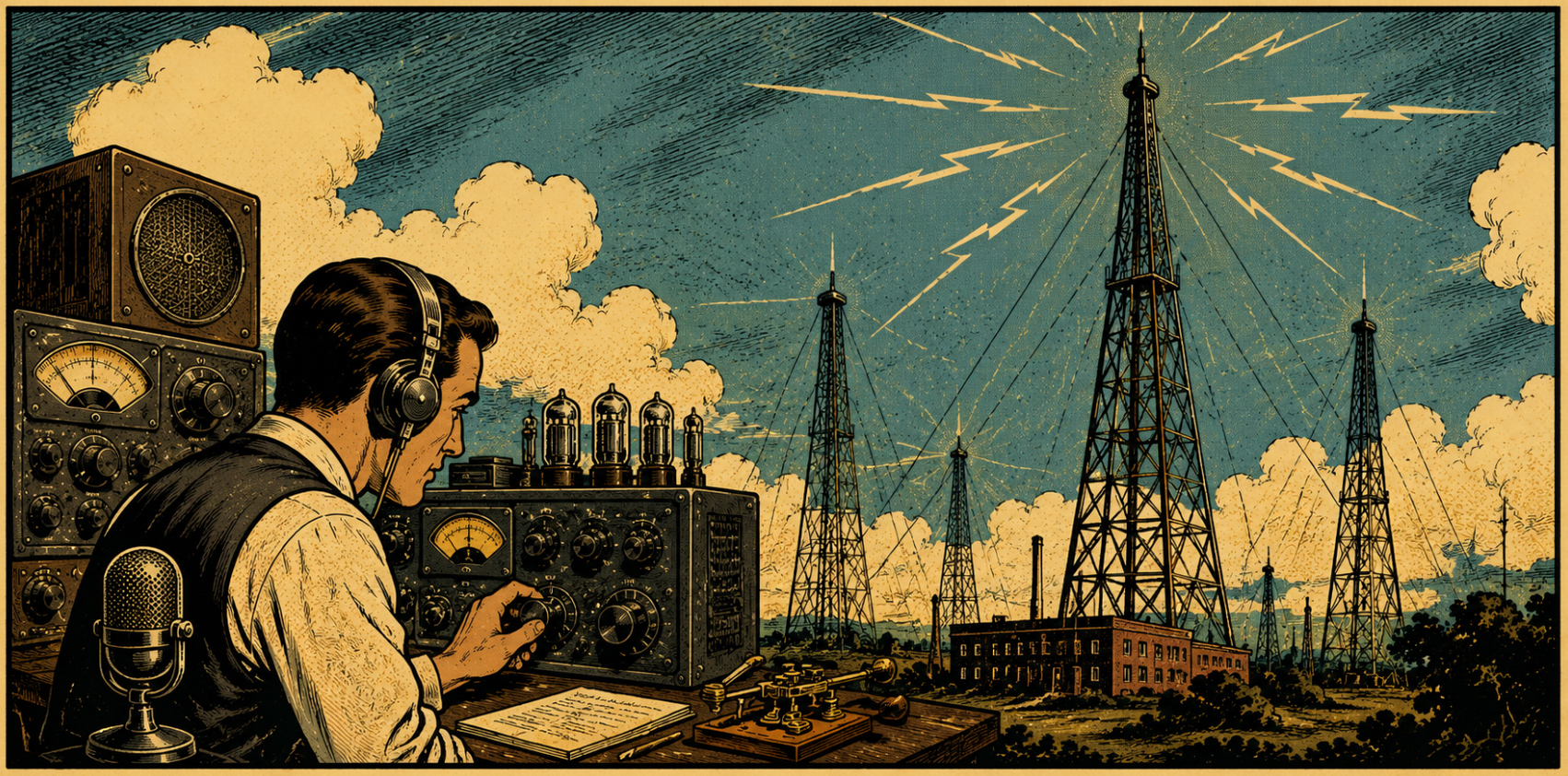
June 27, 2026, will be remembered as a historic day in broadcasting. On that day, the BBC will end transmissions of Radio 4 on 198 kHz in the Long Wave band. At 00:00 UTC, three historic transmitters—Droitwich in England and Burghead and Westerglen in Scotland—will fall silent. This marks the end of nearly 92 years of one of the most recognizable radio services in Europe.
For many amateur radio operators, the BBC signal on 198 kHz was much more than just a radio station. For decades, it served as a reliable reference signal for calibrating receivers and test equipment. Before 1988, the service operated on 200 kHz, corresponding to a wavelength of 1,500 meters, which became a symbol of British long-wave broadcasting.
The Droitwich transmitter was commissioned in 1934 and for most of the twentieth century was one of the United Kingdom’s most important broadcasting facilities. Its signal reached not only the entire UK but also large parts of Europe. For many radio amateurs and listeners, the distinctive signal on 198 kHz was an integral part of the radio landscape.
Over the years, BBC Radio 4 Long Wave carried iconic programs such as the famous Shipping Forecast, Test Match Special cricket coverage, and parliamentary broadcasts. During World War II, the long-wave service was also used to transmit coded messages to the French Resistance.
The 198 kHz transmission also served a practical purpose. For many years, the signal carried data used by British electricity meters to switch between off-peak and standard tariffs. Thanks to the enormous coverage area of the transmitter, this information could be distributed across almost the entire country.
According to the BBC, the main reasons for the shutdown are aging transmission infrastructure, high maintenance costs, and the steadily declining number of listeners using long-wave radio. Most audiences now rely on FM, DAB, and internet streaming services. Modernizing the nearly century-old system was deemed economically unjustifiable.
Among radio amateurs and enthusiasts of traditional broadcasting, however, the decision has generated considerable emotion. Many point out that a single long-wave transmitter provides enormous coverage and can serve as an independent means of communication during emergencies. For many observers, the shutdown of 198 kHz symbolizes the end of an era.
To commemorate the closure of BBC Radio 4 Long Wave, the Radio Society of Great Britain (RSGB) and the BBC Amateur Radio Group have organized a series of special event stations. The primary callsign will be GB1500M, a reference to the historic 1,500-meter wavelength. The station will be active from June 21 to June 27, 2026, and will be operated by licensed amateur radio operators throughout the United Kingdom, the Isle of Man, and the Channel Islands.
During the same period, additional special event callsigns associated with the three transmitters being retired from service on 198 kHz will also be active. GB198LW will operate from the Droitwich area beginning on June 26 and continuing through the transmitter shutdown. In Scotland, GB198END will commemorate the Burghead transmitter, while the Stirling and District Amateur Radio Society will activate GB198KHZ in honor of the Westerglen transmitter. These stations will operate on multiple amateur bands and modes, giving radio amateurs around the world an opportunity to make commemorative contacts related to this historic event.
Special QSL cards will also be available, providing participants with a unique souvenir marking the end of one of Europe’s longest-running radio transmissions.
The closure of BBC Radio 4 Long Wave does not mark the end of radio, but it does bring to a close one of the most significant chapters in the history of European broadcasting. For many radio amateurs, listeners, and technology enthusiasts, it will be a symbolic farewell to the era of high-power long-wave transmitters that connected millions of listeners with a single signal for nearly a century.
On June 27, 2026, the frequency of 198 kHz will fall silent. Yet it will remain in the memories of many as one of the most iconic radio signals of the twentieth and twenty-first centuries. For the amateur radio community, it is not only the end of a technology but also an opportunity to reflect on the enormous impact that long-wave broadcasting and powerful transmitting stations have had on the development of global communications.