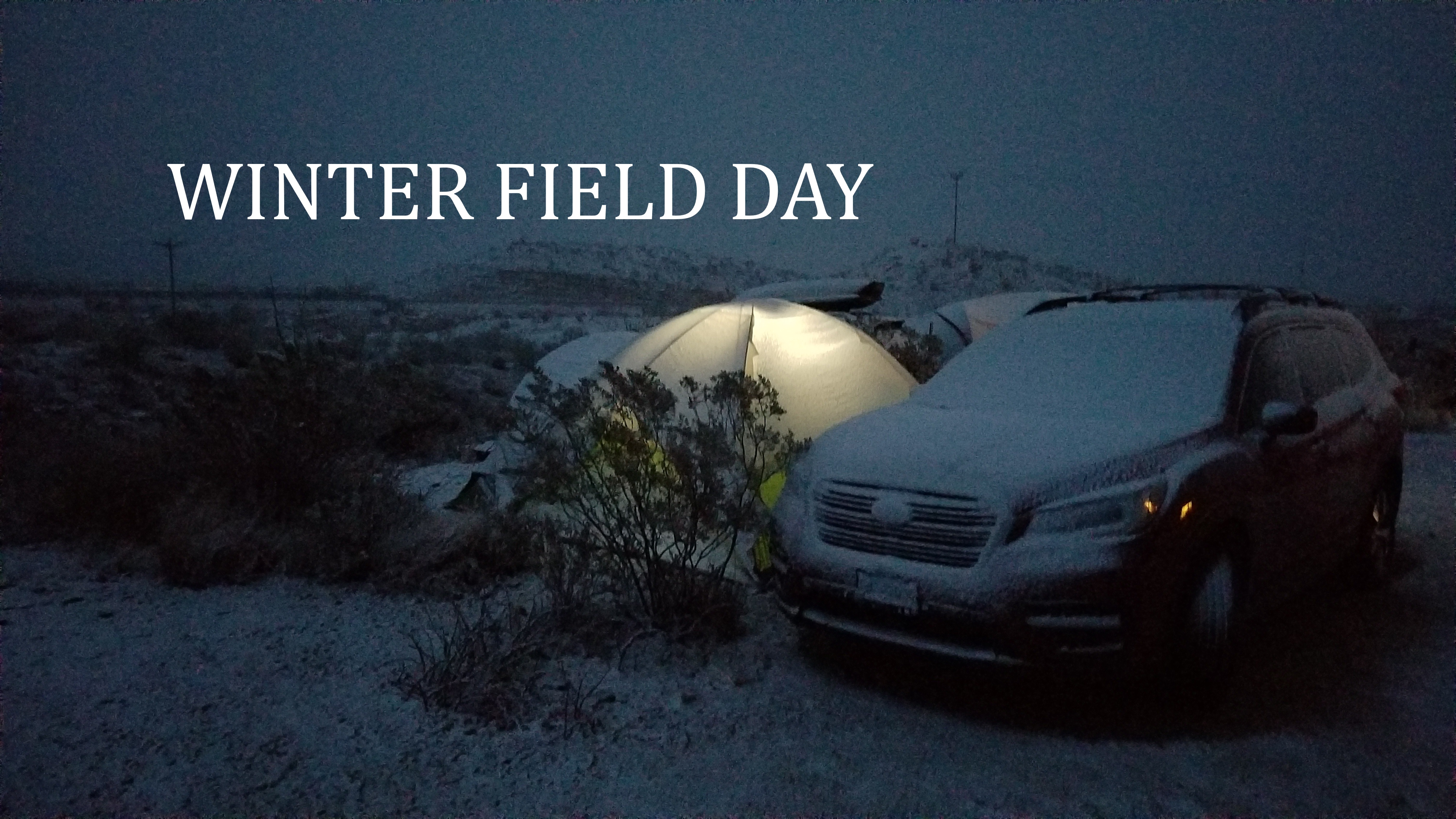
Winter Field Day is the winter version of the popular summer Field Day, held on the last full weekend of January. In 2026, Winter Field Day will take place on January 24–25, starting on Saturday at 16:00 UTC and ending on Sunday at 21:59 UTC. It is a 30-hour event during which amateur radio operators test their equipment and skills in challenging winter conditions.
Unlike a summer radio picnic, Winter Field Day is a true test of both character and equipment. Imagine having to set up an antenna while temperatures drop below freezing and strong winds make every movement difficult. Cables become stiff like wire, fingers freeze even inside gloves, and batteries lose power twice as fast as they do in summer. These are exactly the conditions under which Winter Field Day participants operate… unless, of course, they live in Florida.
Operating from a warm home or cabin is allowed, but the real experience is gained by those who choose a tent or a true field station. The harsher the conditions, the more bonus points are available—but the most important thing is not the points. What matters most is the knowledge gained.
Winter Field Day is primarily about preparation for emergency situations. When winter snow falls, winds bring down power lines, electricity fails, and mobile phones stop working, amateur radio operators must be ready to act. These are precisely the conditions that Winter Field Day is designed to simulate.
This is not theory read from a book. It is hands-on learning—how to keep a radio operating when everything else fails. How do you protect batteries from the cold? How do you quickly deploy an antenna in a snowstorm? How do you operate when your hands are freezing despite wearing gloves? How do you manage limited power for many hours? These skills can save lives during a real disaster.
Many ARES and RACES groups treat Winter Field Day as an official emergency preparedness exercise. Amateur radio clubs travel together, testing their emergency communication plans in real winter conditions. When a real snowstorm hits and someone needs help, there is no time for experiments or on-the-job learning. You must know that your equipment will work and that you know how to operate it.
Winter Field Day teaches humility and preparedness. After a weekend spent in a cold tent, you know exactly what works and what needs improvement. You know which batteries are reliable, which antenna can withstand the wind, and how long it takes you to deploy a station. This knowledge can be invaluable when a real emergency occurs and your community needs communications.
That is why Winter Field Day is more than just a winter radio contest. It is preparation for the role that amateur radio operators play in the public safety system when all other means of communication fail.